Enrichment for Dogs: Simple Ideas for a Happier, Calmer Dog
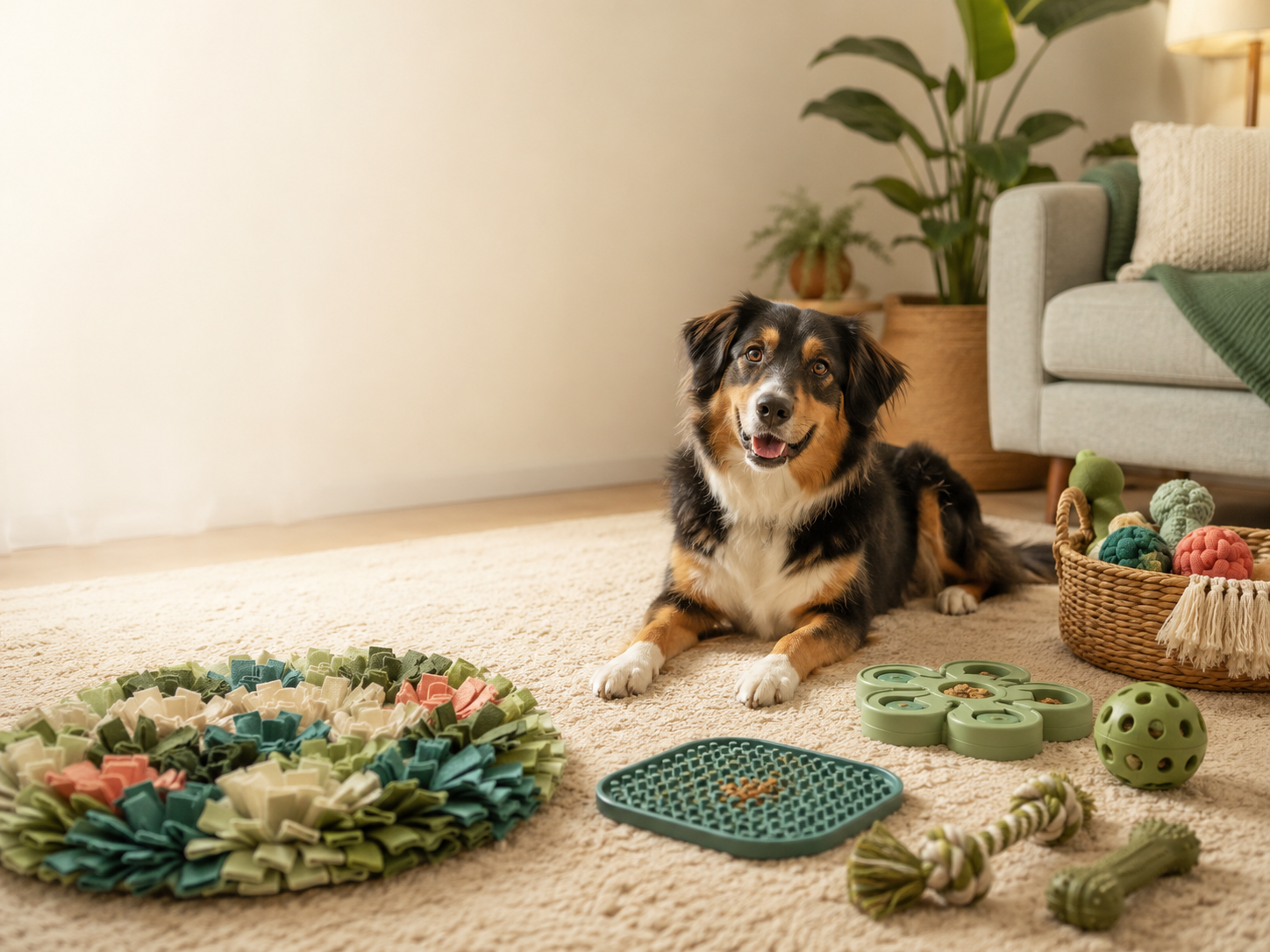
Dog enrichment gives your dog safe, satisfying ways to sniff, chew, lick, search, think, move, bond, and rest. A good enrichment routine does not need to be expensive or complicated. Small daily activities can help your dog feel calmer, happier, and more fulfilled at home.
Quick answer
What Is Dog Enrichment?
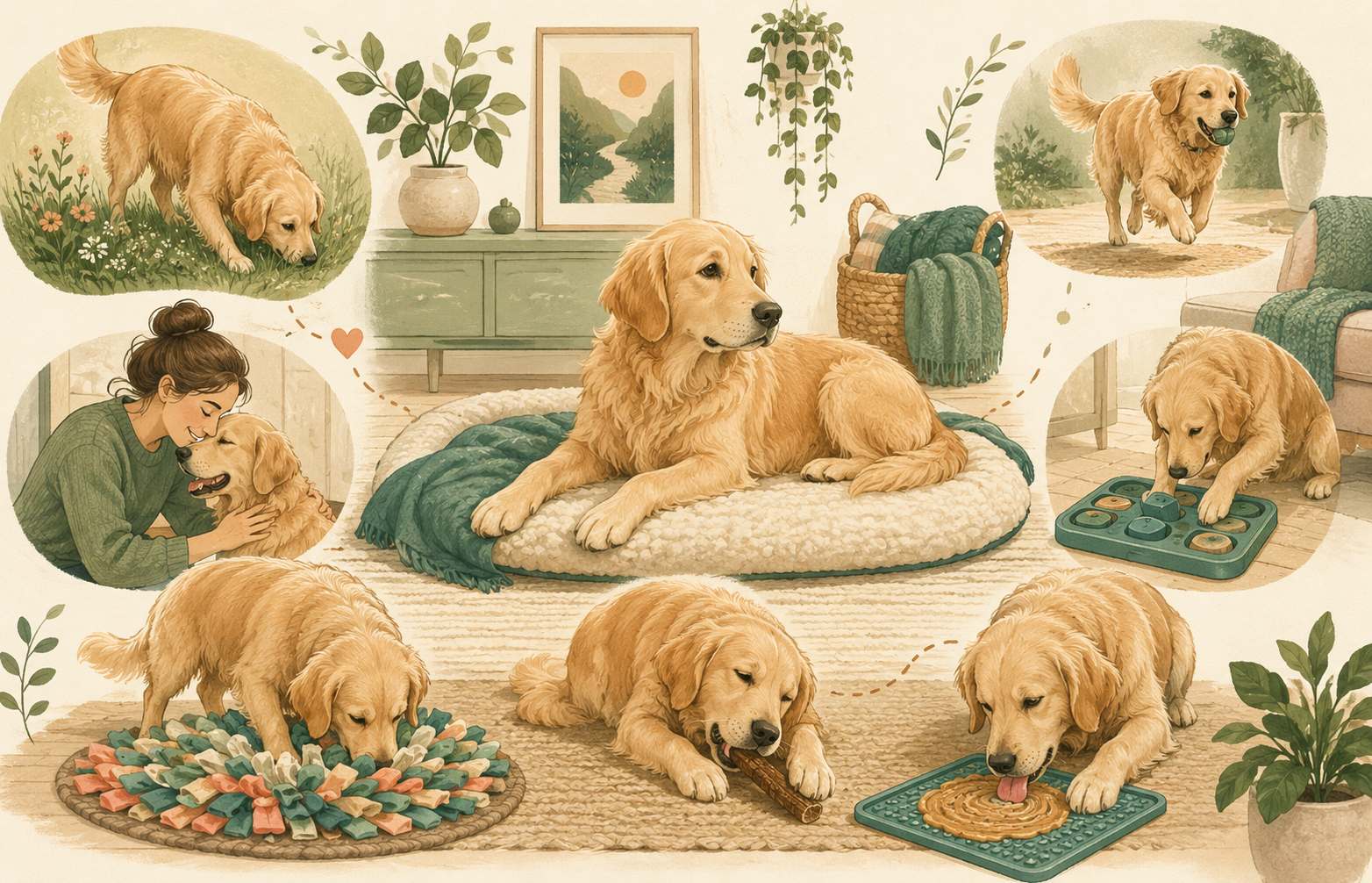
Dog enrichment is any safe activity that makes your dog’s day more interesting, mentally engaging, and satisfying. Good enrichment gives dogs appropriate ways to do natural dog things, such as sniffing, chewing, licking, searching for food, problem-solving, playing, exploring, bonding with you, and resting.
Why it matters
Why Dogs Need Enrichment
Many dogs live very predictable lives. They eat from the same bowl, walk the same route, sleep in the same spots, and play with the same toys. Routine can be comforting, but a life with too little variety can become boring.
Dogs are curious animals. They are built to smell, search, chew, move, learn, interact, and explore. Even if your dog is not a working dog, those natural needs do not disappear.
Enrichment can help your dog use mental energy in a healthy way, enjoy meals more, build confidence, reduce boredom-related behavior, settle more easily after activity, and have more variety in their routine.
Natural Outlets
Sniffing, chewing, licking, searching, and problem-solving are normal dog behaviors. Enrichment gives your dog appropriate ways to use them.
Mental Stimulation
A short scent game, training session, or food puzzle can help your dog use their brain without needing a huge backyard or a long hike.
Better Daily Routines
Simple enrichment can make rainy days, workdays, apartment life, quiet evenings, and rest days easier for both you and your dog.
Common reader problem
Signs Your Dog May Need More Enrichment
Your dog may need more enrichment if they often seem restless, follow you from room to room, bark for attention, chew things they should not, steal socks or paper, dig at blankets, get into the garbage, demand play every evening, or struggle to settle after a normal walk.
Possible boredom signs
- Restlessness after normal exercise
- Attention-seeking barking or whining
- Stealing socks, wrappers, paper, or household items
- Chewing furniture, shoes, blankets, or baseboards
- Digging at blankets, rugs, furniture, or the yard
- Pacing, toy-pestering, or difficulty settling
- Getting into garbage, counters, or off-limit areas
When to look deeper
Boredom is not the only reason dogs do these things. Pain, anxiety, stress, separation-related problems, lack of sleep, diet changes, and medical issues can also affect behavior. If your dog’s behavior changes suddenly, seems intense, or does not improve with a healthier routine, speak with your veterinarian or a qualified reward-based dog trainer.
Start here
The 5-Minute Dog Enrichment Starter Plan
If you are overwhelmed, start small. Choose one simple activity, make it easy, supervise your dog, and follow it with calm time. That is enough to begin.
Pick One Need
Does your dog need to sniff, chew, lick, think, move, or settle? Choose the activity based on the moment.
Make It Easy
Start with visible treats, loose towel folds, open boxes, simple puzzles, or a short sniff walk.
Supervise First
Watch new toys, chews, towels, cardboard, and food puzzles until you know how your dog uses them.
Add Rest
After enrichment, give your dog quiet time. The goal is satisfaction, not more excitement.
Try this today
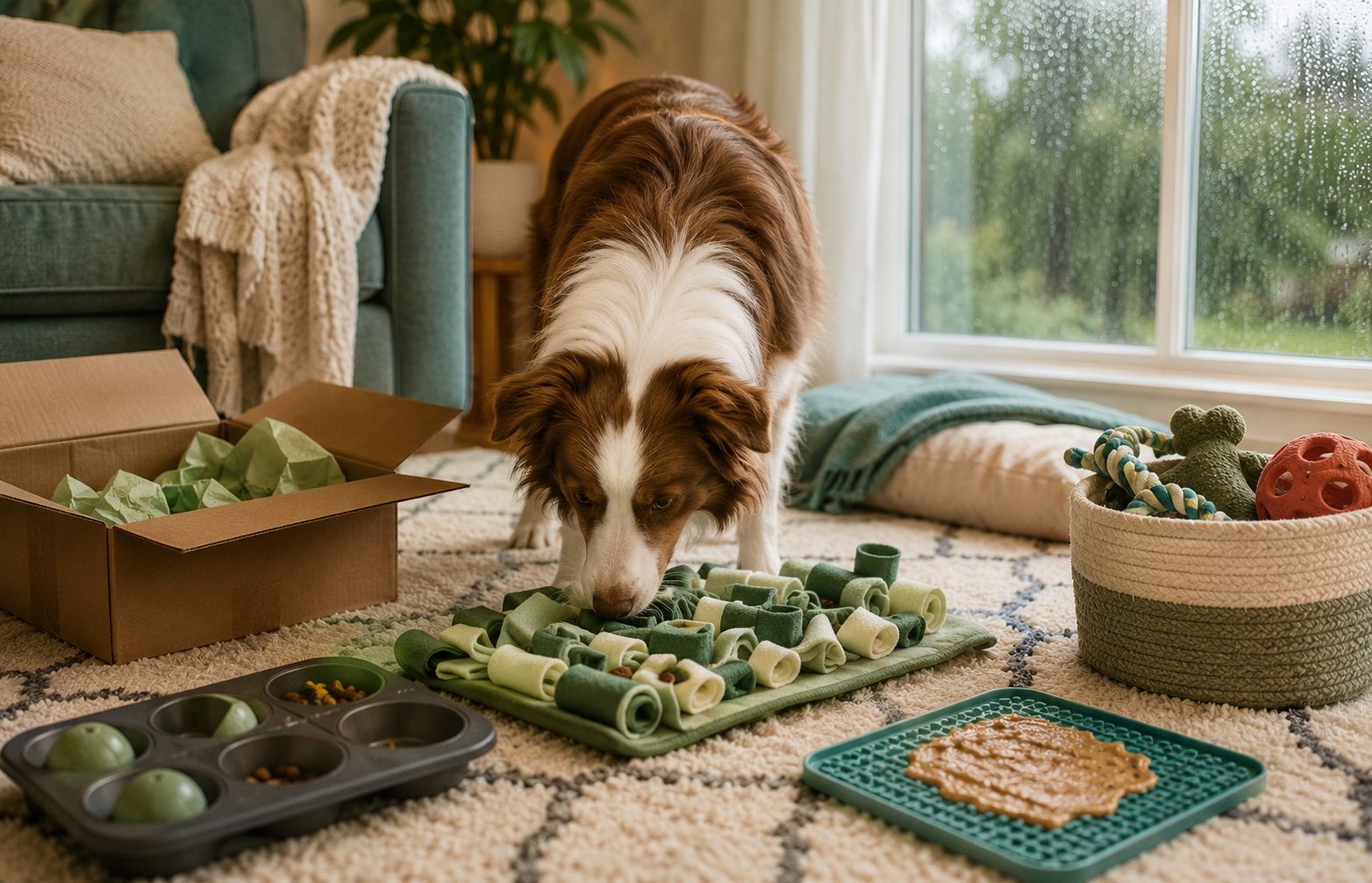
Sprinkle part of your dog’s dinner on a towel, roll it loosely, let your dog unroll it while supervised, then give them a calm rest period afterward. It is simple, low-cost, and beginner-friendly.
Choose by time
Dog Enrichment Ideas by Time Available
Enrichment does not need to take over your day. Pick an activity that fits the time and energy you actually have.
Quick Wins
- Scatter a few pieces of kibble on a towel
- Practice “touch” or “find it”
- Hide 5 treats in one room
- Offer a short lick mat
- Do calm brushing or handling practice
Everyday Enrichment
- Take a slow sniff walk
- Use a snuffle mat for breakfast
- Set up a towel roll-up
- Play hide and seek
- Do a short training game followed by rest
Fuller Activities
- Visit a quiet trail or new walking route
- Create a cardboard box search
- Freeze a stuffed toy for calm time
- Teach toy names or toy cleanup
- Build a safe indoor obstacle course
Complete framework
The 7 Types of Dog Enrichment
A strong dog enrichment routine is not just a basket of toys. It is a thoughtful mix of different activities that meet different needs. Use these seven categories as your weekly checklist.
Sniffing Enrichment
Sniffing is one of the easiest and most natural enrichment activities for dogs. A sniff-focused activity lets your dog explore, slow down, and gather information.
- Slow sniff walks
- Scatter feeding in grass
- Snuffle mats
- Find-it games
- Cardboard box searches
- Short scent trails with tiny food pieces
Licking Enrichment
Licking gives many dogs a steady activity to focus on. Lick mats and frozen stuffed toys can be helpful during quiet time, crate time, grooming practice, or evening wind-down routines.
- Lick mats
- Frozen stuffed toys
- Freezer-safe bowls
- Slow feeders with soft food
- Soaked kibble spread thinly
- Wet dog food mixed with water
See recommended lick mats and enrichment products
Chewing Enrichment
Chewing is a normal dog behavior. Dogs chew to explore, relax, stay busy, and satisfy a natural need to use their mouth.
- Durable rubber toys
- Vet-approved dental chews
- Food-stuffed rubber toys
- Chews matched to your dog’s size
- Soft plush toys for gentle chewers
- Supervised chew sessions
Thinking Enrichment
Thinking enrichment helps dogs problem-solve, focus, listen, and learn. It does not need to be advanced. Five minutes of simple training can be enough for many dogs.
- Touch
- Wait
- Find it
- Place
- Drop it
- Toy-name games
- Toy cleanup
Food Enrichment
Food enrichment turns normal meals into something more satisfying. Instead of adding a lot of extra treats, use part of your dog’s regular food in a more interesting way.
- Puzzle feeders
- Snuffle mats
- Towel roll-ups
- Muffin tin puzzles
- Treat-dispensing toys
- Kibble hidden in paper cups
Browse dog enrichment product ideas
Movement Enrichment
Movement enrichment does not need to mean intense exercise. Gentle movement, new routes, recall games, and safe indoor obstacle activities can all give your dog variety.
- New walking routes
- Gentle tug
- Hide and seek
- Low indoor obstacles
- Recall practice in a safe area
- Exploring a quiet trail
Bonding and Rest
Enrichment is not just about keeping your dog busy. Dogs also need connection, predictability, calm, and recovery time after exciting or mentally challenging activities.
- Brushing
- Gentle massage
- Calm mat training
- Sitting outside together
- Hand-feeding part of a meal
- Rest after enrichment
Choose the right activity
Calming vs. Energizing Enrichment
Not every activity has the same effect. Some enrichment helps dogs settle. Other enrichment wakes them up. A common mistake is using high-energy play when a dog actually needs calming enrichment.
| Goal | Good Options | Helpful Note |
|---|---|---|
| Help your dog settle | Lick mat, frozen stuffed toy, safe chew, slow sniff walk, settle mat. | Use when your dog is already wired, restless, or needs quiet time. |
| Burn mental energy | Food puzzle, scent game, toy-name game, short training session. | Keep sessions short and stop before frustration starts. |
| Add movement | Walk, gentle tug, recall game, hide and seek, low obstacle course. | Match the activity to your dog’s age, body, and fitness level. |
| Build confidence | Easy puzzle, calm exploration, simple training wins, visible find-it games. | Make the first round almost too easy so your dog succeeds. |
| Reduce boredom | Snuffle mat, box search, toy rotation, find-it game, scatter feeding. | Rotate activities so your dog’s routine stays interesting. |
Helpful rule
If your dog is already jumping, barking, pacing, or grabbing at you, a fast game of chase may make them more excited. Try sniffing, licking, chewing, or calm training instead.
Life stage guide
Dog Enrichment by Age
Many enrichment ideas can work for puppies, adult dogs, and senior dogs, but the difficulty, texture, pace, and safety details should change based on your dog’s stage of life.
Puppies
Puppies need gentle, beginner-friendly enrichment that supports chewing, confidence, calm, and learning. Keep activities short, easy, and supervised.
- Soft food puzzles
- Frozen lick mats
- Easy sniff games
- Short training sessions
- Gentle chewing outlets
- Calm crate or playpen enrichment
Adult Dogs
Adult dogs benefit from variety. They usually do well with a weekly mix of sniffing, chewing, licking, puzzle meals, training, movement, bonding, and rest.
- Sniff walks
- Food puzzles
- Scent games
- Training games
- Safe chews
- Toy rotation
Senior Dogs
Senior dogs often need gentler enrichment that supports comfort, confidence, and mental stimulation without too much strain.
- Easy sniff walks
- Soft food puzzles
- Gentle lick mats
- Low-impact training
- Brushing and calm companionship
- Slow scatter feeding
Personalize it
Best Dog Enrichment Ideas by Dog Type
Not every enrichment idea fits every dog. Choose activities based on your dog’s age, chewing style, energy level, frustration tolerance, food motivation, and health.
| Dog Type | Best Enrichment Ideas | What to Avoid | Best First Step |
|---|---|---|---|
| High-energy dogs | Sniff walks, scent games, training games, tug with rules, food puzzles, recall practice, and safe obstacle courses. | Only using fast fetch or high-arousal play. | Pair a sniff walk with a calm chew or lick mat. |
| Anxious dogs | Easy sniff games, predictable routines, lick mats, gentle chewing, calm scatter feeding, and simple training wins. | Hard puzzles, chaotic games, forced greetings, or too much novelty at once. | Start with scatter feeding in one quiet room. |
| Food-motivated dogs | Snuffle mats, towel roll-ups, slow feeders, frozen toys, muffin tin puzzles, and hide-a-treat games. | Too many extra treats outside normal meals. | Use part of breakfast in a snuffle mat. |
| Dogs who get frustrated | Loose towel games, open box searches, visible treat trails, easy puzzle feeders, and short training with quick rewards. | Puzzles that trap food too tightly or take too long. | Make the first few rounds extremely easy. |
| Apartment dogs | Snuffle mats, hallway treat toss, hide and seek, lick mats, toy rotation, short trick sessions, and settle mat practice. | Loud, slippery, or high-impact indoor games. | Try a 10-treat find-it game in one room. |
| Senior dogs | Gentle sniffing, soft food puzzles, low-impact training, lick mats, brushing, slow scatter feeding, and calm outdoor time. | Slippery floors, jumping, hard chews, and difficult puzzles. | Choose gentle activities that are easy on the body. |
| Strong chewers | Durable rubber toys, supervised chew sessions, appropriately sized toys, food-stuffed rubber toys, and vet-approved dental chews. | Loose pieces, soft toys that are destroyed quickly, or chews that are too hard for your dog’s teeth. | Supervise the first few chew sessions carefully. |
Rainy day friendly
Indoor Dog Enrichment Ideas
Indoor enrichment is perfect when your dog needs something to do at home, but you do not want to make them more wired. Start easy, supervise new games, and choose calm activities when your dog is already excited.
10-Treat Find-It Game
Hide 10 small treats around one room. Start with easy spots near furniture or toys, then make the hiding places slightly harder as your dog learns.
Towel Roll-Up
Sprinkle kibble on a towel, roll it loosely, and let your dog unroll it while supervised. Keep it easy at first.
Muffin Tin Puzzle
Place kibble in a few muffin tin cups and cover some cups with tennis balls or safe toys. Let your dog move the objects to find the food.
Cardboard Box Search
Place a few open boxes on the floor and hide treats in one or two. Remove tape, staples, plastic, strings, and anything your dog could swallow.
Settle Mat Practice
Reward your dog for stepping onto a mat, lying down, and relaxing. This can help teach calm behavior in a gentle way.
Toy Rotation
Put some toys away and rotate them every few days. Old toys can feel more exciting when your dog has not seen them all week.
Three-Cup Game
Place a treat under one of three sturdy cups. Move the cups slowly and let your dog sniff or point to the correct one.
Hallway Recall Game
Call your dog from one end of a hallway, reward them, toss a treat behind them, then call them back again.
Toy Cleanup Game
Teach your dog to place toys in a basket. Build slowly from touching the toy to picking it up to dropping it near the basket.
Outside ideas
Outdoor Enrichment Ideas for Dogs
Outdoor enrichment does not need to mean dog parks or long hikes. Many dogs benefit more from quiet, low-pressure exploration than from crowded or overwhelming environments.
Slow Sniff Walk
Choose a safe route and let your dog sniff more than usual. This is not about distance. It is about giving your dog time to explore.
New Route Walk
Walk a slightly different route so your dog gets new smells, surfaces, sounds, and sights without needing an intense adventure.
Grass Scatter Feeding
Scatter a small portion of kibble in a clean, safe patch of grass and let your dog sniff it out while supervised.
Long-Line Exploring
In a safe open area, a long line can give your dog more room to sniff while still keeping them secure.
Quiet Trail Visit
A calm trail or open outdoor space can be enriching without the pressure of forced greetings or crowded dog areas.
Bench Break
Sit together and let your dog calmly watch, sniff, and take in the environment from a comfortable distance.
For shy, anxious, or reactive dogs
Avoid forced greetings. Social pressure is not enrichment if your dog feels unsafe. Choose distance, sniffing, quiet routes, and calm exploration instead.
Budget-friendly
DIY Dog Enrichment Ideas Using Things You Already Have
You do not need to buy a lot of products to start. Many easy dog enrichment ideas use simple household items and your dog’s regular food.
Towel Roll-Up
Sprinkle kibble on a towel, roll it loosely, and let your dog unroll it while supervised.
Box Search
Hide treats in open cardboard boxes. Remove tape, staples, plastic, stickers, strings, and anything your dog might swallow.
Muffin Tin Puzzle
Place kibble in a muffin tin and cover some cups with tennis balls or safe toys.
Paper Cup Search
Place a treat under one sturdy cup and let your dog sniff it out. Start with the treat partly visible.
Toy Pile Search
Hide a few pieces of kibble among your dog’s toys and let them use their nose to search.
Treat Trail
Make a short trail of tiny food pieces for your dog to follow. Keep the trail easy at first.
DIY safety reminder
Always supervise DIY enrichment. Remove anything your dog tries to chew, shred, swallow, or guard.
Make it easier
The Dog Enrichment Difficulty Ladder
A lot of enrichment fails because it starts too hard. Start easier than you think you need to. A puzzle that is too easy still gives your dog a win. A puzzle that is too hard can create frustration.
Beginner
Best for puppies, anxious dogs, frustrated dogs, and dogs new to enrichment.
Try scatter feeding, open box searches, loose towel rolls, or easy lick mats.
Simple Problem Solving
Best for dogs who understand basic food games.
Try snuffle mats, half-covered muffin tins, folded towels, or simple puzzle toys.
Confident Searchers
Best for dogs who enjoy working for food and do not give up quickly.
Try covered muffin tins, stuffed frozen toys, room searches, or multi-step puzzles.
Advanced Enrichment
Best for confident dogs who need more challenge.
Try toy-name games, scent trails, complex box searches, and chained training games.
Daily structure
A Simple Daily Dog Enrichment Routine
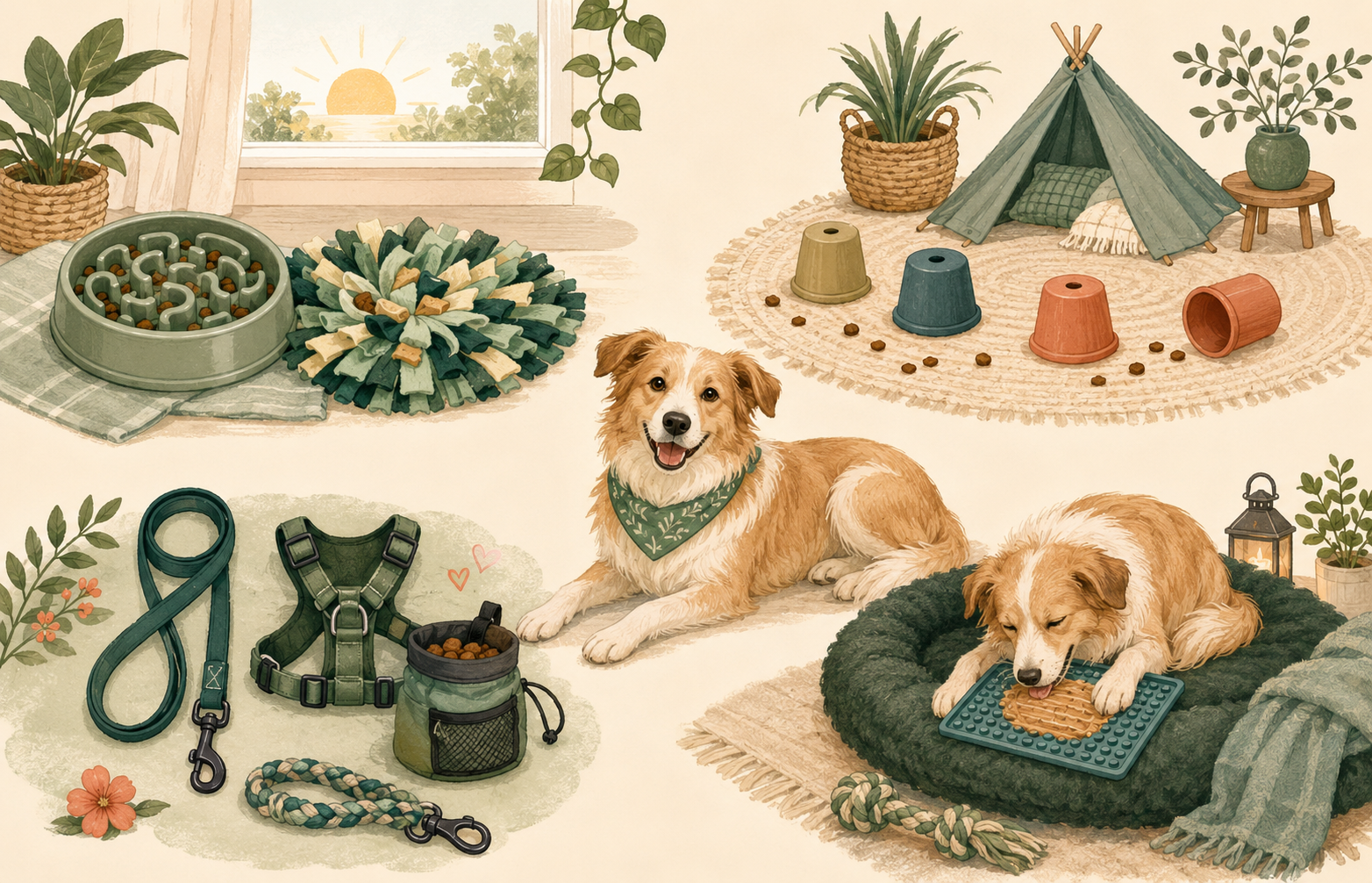
You do not need to fill the whole day with activities. A good daily rhythm can be simple: one food activity, one sniffing or movement activity, one short thinking activity, and plenty of rest.
Morning
Serve breakfast in a snuffle mat, slow feeder, towel roll-up, or puzzle toy instead of a plain bowl.
Midday
Use a short find-it game, safe chew, or easy box search to break up a quiet workday.
Afternoon
Take a walk with intentional sniffing time. Let your dog explore instead of rushing every step.
Evening
Do five minutes of training, then offer a calming chew, lick mat, or settle activity.
The calm routine pattern
Activity → calming activity → rest. For example: sniff walk → frozen lick toy → nap. Training game → chew → rest. Food puzzle → potty break → quiet time.
Easy weekly plan
Weekly Enrichment Plan for Dogs
This simple weekly dog enrichment plan gives your dog variety without making every day feel complicated. Use it as a flexible starting point, then adjust the activities based on your dog’s age, energy level, chewing style, and routine.
Monday
Sniffing + FoodSlow sniff walk and a snuffle mat or scatter-feeding meal.
Tuesday
Training + ChewingFive-minute cue practice followed by a safe chew.
Wednesday
Puzzle MealTowel roll-up, slow feeder, muffin tin, or beginner puzzle.
Thursday
Licking + SettlingLick mat, frozen stuffed toy, or soft spreadable food activity.
Friday
Find-It GameHide a few pieces of kibble around one room and let your dog search.
Saturday
AdventureNew walking route, quiet trail, or outdoor sniff session.
Sunday
Gentle ResetBrushing, calm sniff walk, toy rotation, and rest.
Keep it flexible
You do not need to follow this plan perfectly. The goal is to rotate different types of enrichment so your dog gets sniffing, chewing, licking, thinking, movement, bonding, and rest throughout the week.
Avoid these
Common Dog Enrichment Mistakes
Making puzzles too difficult too soon
A puzzle should feel achievable. If your dog gives up, barks at the toy, paws frantically, bites the puzzle aggressively, or walks away, make it easier. Start with visible treats, loose folds, open boxes, and simple wins.
Only using high-energy activities
Fast games can be fun, but some dogs become more wired after too much excitement. Balance fetch, tug, chase, and running with sniffing, licking, chewing, and rest.
Adding too many extra treats
Food enrichment works best when you use part of your dog’s regular meals. This keeps enrichment fun without accidentally overfeeding.
Skipping supervision
Always supervise new enrichment activities. Some dogs chew puzzle toys, swallow pieces, shred towels, or guard high-value items.
Forgetting rest
Rest is part of enrichment. Dogs need time to recover after sniffing, training, playing, and chewing. A fulfilled dog should be able to settle.
Assuming dog parks count as enrichment for every dog
Some dogs love dog parks. Others find them overwhelming, stressful, or unsafe. Enrichment should feel good for your dog, not just exciting from the outside.
Safety first
Dog Enrichment Safety Checklist
Enrichment should make your dog’s life better. It should not create stress, danger, guarding, stomach upset, or frustration. Use this checklist before trying new activities.
Keep reading
Related Dog Enrichment Guides
Use this page as your main dog enrichment hub, then send readers to more specific guides based on what they need next.
Questions
FAQ About Dog Enrichment
What is the best enrichment for dogs?
The best enrichment for dogs is a balanced mix of sniffing, licking, chewing, training, food puzzles, movement, bonding, and rest. A snuffle mat, slow sniff walk, towel roll-up, short training game, and safe chew are great beginner options.
What are easy dog enrichment ideas?
Easy dog enrichment ideas include scatter feeding, snuffle mats, muffin tin puzzles, frozen lick toys, towel roll-ups, cardboard box searches, toy rotation, hide and seek, hallway recall, and find-it games.
What are good mental stimulation activities for dogs?
Good mental stimulation activities for dogs include scent games, food puzzles, trick training, toy-name games, hide and seek, short training sessions, and simple problem-solving games.
How do I mentally tire out my dog?
Use activities that make your dog sniff, search, think, and problem-solve. A slow sniff walk, food puzzle, short training session, and calming chew can be more satisfying than only physical exercise.
What indoor enrichment for dogs works best?
The best indoor enrichment for dogs includes snuffle mats, lick mats, safe chews, treat puzzles, hide and seek, hallway treat toss, training games, towel roll-ups, and supervised cardboard box searches.
Can enrichment help with boredom?
Yes. Enrichment can help reduce boredom by giving your dog healthy activities to do. It may help with boredom-related behaviors like chewing, barking, stealing items, or restlessness. If the behavior is sudden, severe, or anxiety-based, speak with a veterinarian or qualified trainer.
Can too much enrichment be bad?
Yes. Some dogs become overstimulated when they are always being entertained. A good routine includes activity, calming activities, and rest.
Do dogs need enrichment every day?
Most dogs benefit from some form of daily enrichment, but it does not need to be complicated. A sniff walk, puzzle meal, short training game, or safe chew can all count.
Is a walk enough enrichment for a dog?
A walk can be great enrichment, especially if your dog gets time to sniff and explore. However, many dogs also benefit from food puzzles, chewing, licking, training, play, and calm bonding time.
Are food puzzles good for dogs?
Food puzzles can be excellent enrichment when they are safe and matched to your dog’s skill level. Start easy, supervise at first, and use your dog’s regular food to avoid overfeeding.
What enrichment is best for dogs left alone?
For alone time, choose options your dog has already used safely while supervised. Many dogs do well with a properly sized stuffed rubber toy or safe chew, but anything that can be shredded, swallowed, or broken should not be left with an unsupervised dog. Dogs with separation anxiety need a proper training plan, not just enrichment toys.
What is the cheapest dog enrichment idea?
One of the cheapest dog enrichment ideas is using your dog’s regular kibble for scatter feeding, towel roll-ups, or find-it games around one room.
What if my dog does not like enrichment toys?
Start easier. Many dogs ignore puzzles because they are too hard at first. Use better-smelling food, leave part of the food visible, and help your dog succeed. Some dogs prefer sniff walks, training games, or chews over puzzle toys, and that is okay.
Trust notes
Sources and Safety Notes
This guide is for general educational purposes and is not a replacement for veterinary care or professional training advice. Always adjust enrichment to your dog’s age, size, chewing style, health, comfort level, and frustration tolerance.
Affiliate disclosure: Enriched Pups may earn a commission from qualifying purchases at no extra cost to you. Only choose products that are appropriate for your dog and supervise new enrichment activities.
Next step
Ready to Build Your Dog’s Enrichment Routine?
Start small today. Pick one activity from this guide, keep it easy, supervise your dog, and follow it with rest. Over time, a few simple enrichment moments can make your dog’s day feel calmer, happier, and more satisfying.