Enrichment for Puppies: Calmer Days, Less Biting, and a Happier Puppy
Puppies do not come with an off switch. Enrichment for Puppies gives your puppy safe, satisfying ways to sniff, chew, lick, search, think, move, socialize, bond, and rest - without turning your whole day into puppy entertainment.
A good puppy enrichment routine is not about doing more and more. It is about choosing the right small activity at the right moment: a sniffing game when your puppy is frantic, a chew when they are mouthy, a lick mat when they need help settling, or a nap routine when they are overtired.
Quick answer
What Is the Best Enrichment for Puppies?
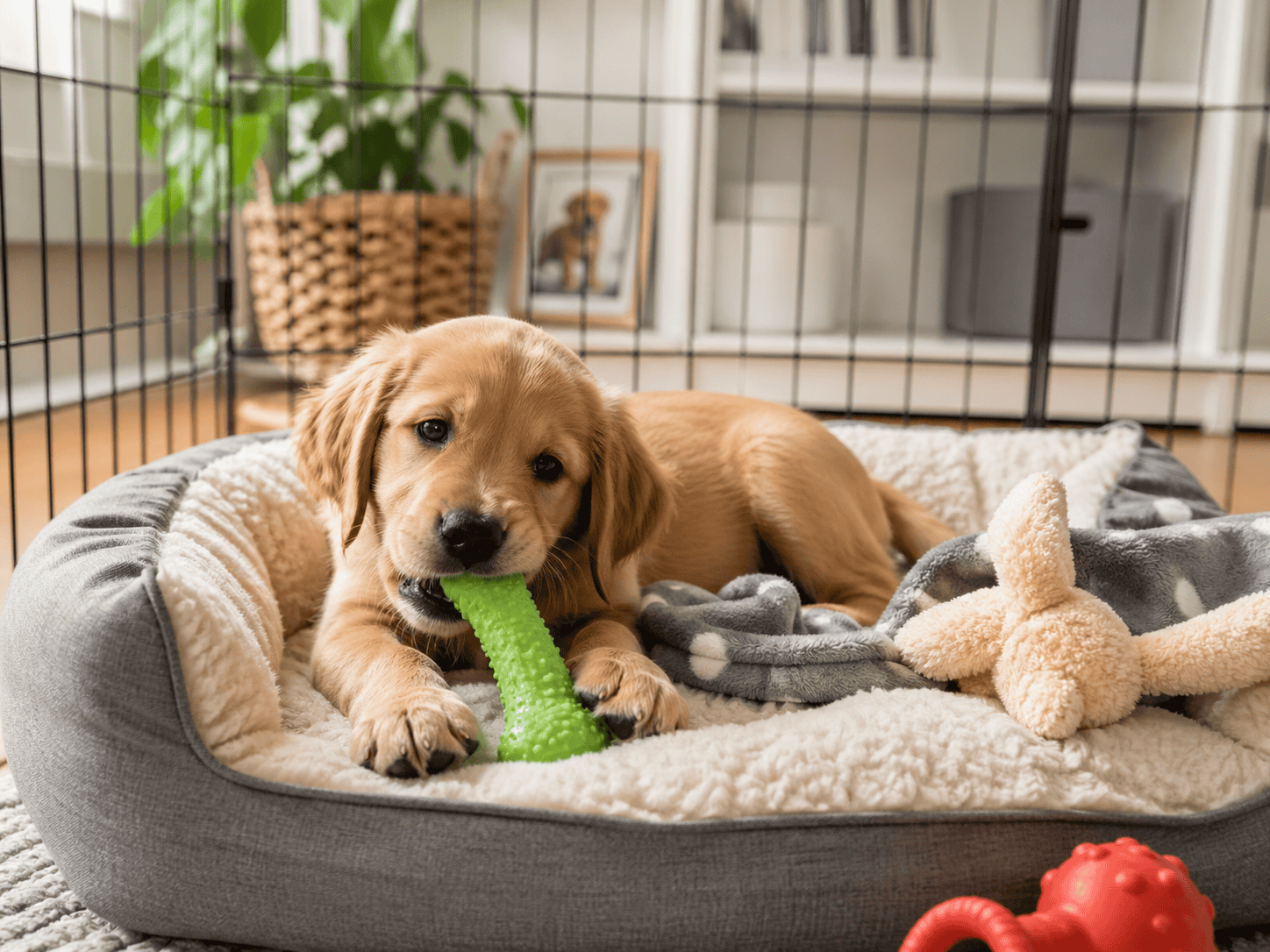
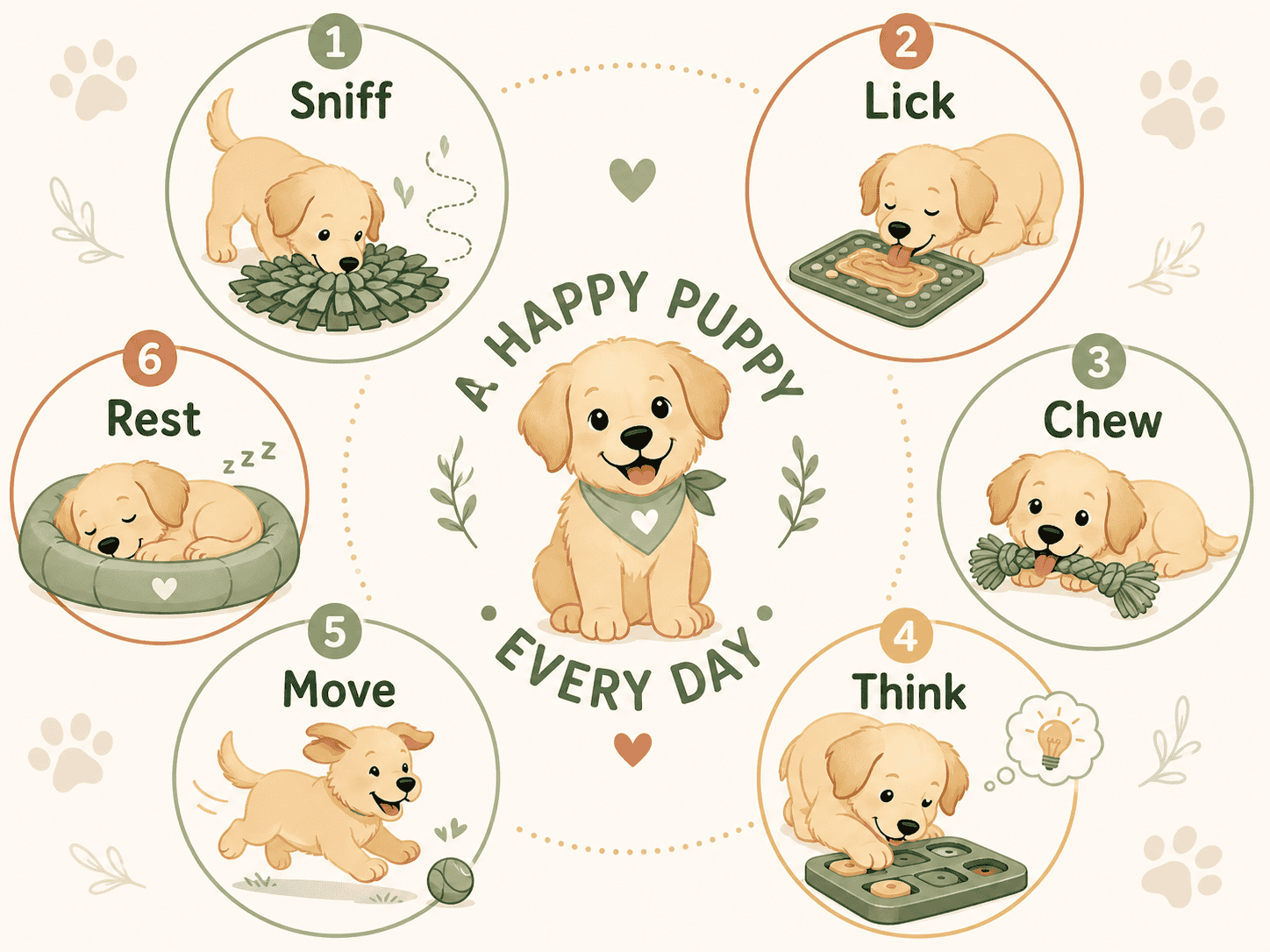
The best Enrichment for Puppies is a simple mix of safe activities that let your puppy sniff, chew, lick, think, move, explore, socialize, bond, and rest.
For most puppies, the most helpful routine is not one giant activity. It is a small rhythm repeated through the day: potty break -> sniffing or food enrichment -> short play or training -> calming activity -> nap.
Puppy basics
What Puppy Enrichment Really Means
Puppy enrichment means giving your puppy safe activities that let them use normal puppy behaviours in appropriate ways. Puppies explore the world with their noses, mouths, paws, ears, eyes, and brains. That is why they sniff everything, chew random objects, chase moving things, dig at blankets, grab socks, and investigate every crumb on the floor.
Those behaviours can be frustrating when they happen in the wrong place, but the behaviour itself is normal. Enrichment gives your puppy a better outlet. Instead of chewing your furniture, they can chew a safe puppy toy. Instead of biting your sleeves, they can tug, sniff, lick, chew, or rest. Instead of inhaling dinner from a bowl, they can search for it in a snuffle mat or towel game.
The goal is not to entertain your puppy all day
The goal is to meet your puppy's needs in small, realistic ways so they can feel satisfied and learn how to relax. A puppy who expects a game every second can become harder to live with, not calmer.
Why it matters
Why Puppies Need More Than Walks and Toys
A fast walk or wild play session can tire your puppy's legs while leaving their brain busy. Enrichment for Puppies fills the missing pieces: sniffing, chewing, licking, problem-solving, calm exploration, socialization, structure, and rest.
Mental Outlets
Puppies need to use their brains in simple ways. Short training games, food puzzles, and scent games can help them focus without needing a long outing.
Safe Mouth Jobs
Puppies naturally chew and mouth things. Safe chew toys, stuffed toys, and teething-friendly options redirect that need away from hands, furniture, and shoes.
Better Rest
Many bitey, wild puppies are overtired. Calming enrichment can help your puppy transition from play mode into nap mode.
Helpful mindset shift
Instead of thinking, "How do I stop my puppy from doing that?" ask, "What is my puppy trying to do, and what safe activity can I give them instead?"
Choose smarter
How to Choose the Right Enrichment for Your Puppy
Enrichment for Puppies works best when it matches the behaviour you are seeing. A puppy chewing the baseboard does not need a hard puzzle. They likely need a safe chew, less freedom near the baseboard, and a calmer setup. A puppy biting your pant leg may need tug, scatter feeding, a potty break, or a nap.
| What your puppy is doing | What they may need | Try this first | Avoid this mistake |
|---|---|---|---|
| Biting hands, sleeves, or ankles | Mouth outlet, less excitement, potty break, or sleep. | Scatter feed 10 pieces of kibble, then offer a chew or lick mat. | Waving hands, squealing, chasing, or making the biting game more fun. |
| Chewing furniture or baseboards | Safe chewing and better management. | Offer a puppy-safe chew in a playpen, crate, or nearby mat. | Giving full house freedom before your puppy is ready. |
| Barking while you work | Predictable attention, a calm job, or a rest routine. | Do 2 minutes of training, then give a snuffle mat or stuffed toy. | Waiting until barking is intense before offering an activity. |
| Evening zoomies | Potty, decompression, calming activity, or sleep. | Potty break -> find-it game -> lick mat -> quiet rest. | Adding chase, wrestling, or high-energy play to an already-wild puppy. |
| Giving up on puzzles | Easier wins and shorter sessions. | Put food on top of the snuffle mat or leave puzzle pieces uncovered. | Making enrichment harder before your puppy understands the game. |
| Seeming nervous around new things | Distance, choice, calm rewards, and easy exploration. | Let your puppy watch from far away while eating treats. | Forcing greetings or pushing your puppy toward things that scare them. |
Complete framework
The 7 Types of Enrichment Every Puppy Needs
Use these seven categories as a simple checklist. You do not need every type every hour. Over a day or week, your puppy should get a balanced mix.
Sniffing Enrichment
Sniffing helps puppies slow down and gather information. It is one of the best resets for puppies who get overstimulated easily.
- Scatter feeding
- Snuffle mats
- Treat trails
- Find-it games
- Slow sniff walks
- Indoor sniff safaris
Licking Enrichment
Licking can be steady and soothing for many puppies. It is useful after play, before crate time, during grooming, or during the evening witching hour.
- Lick mats
- Frozen lick mats
- Soaked kibble spread thinly
- Wet puppy food
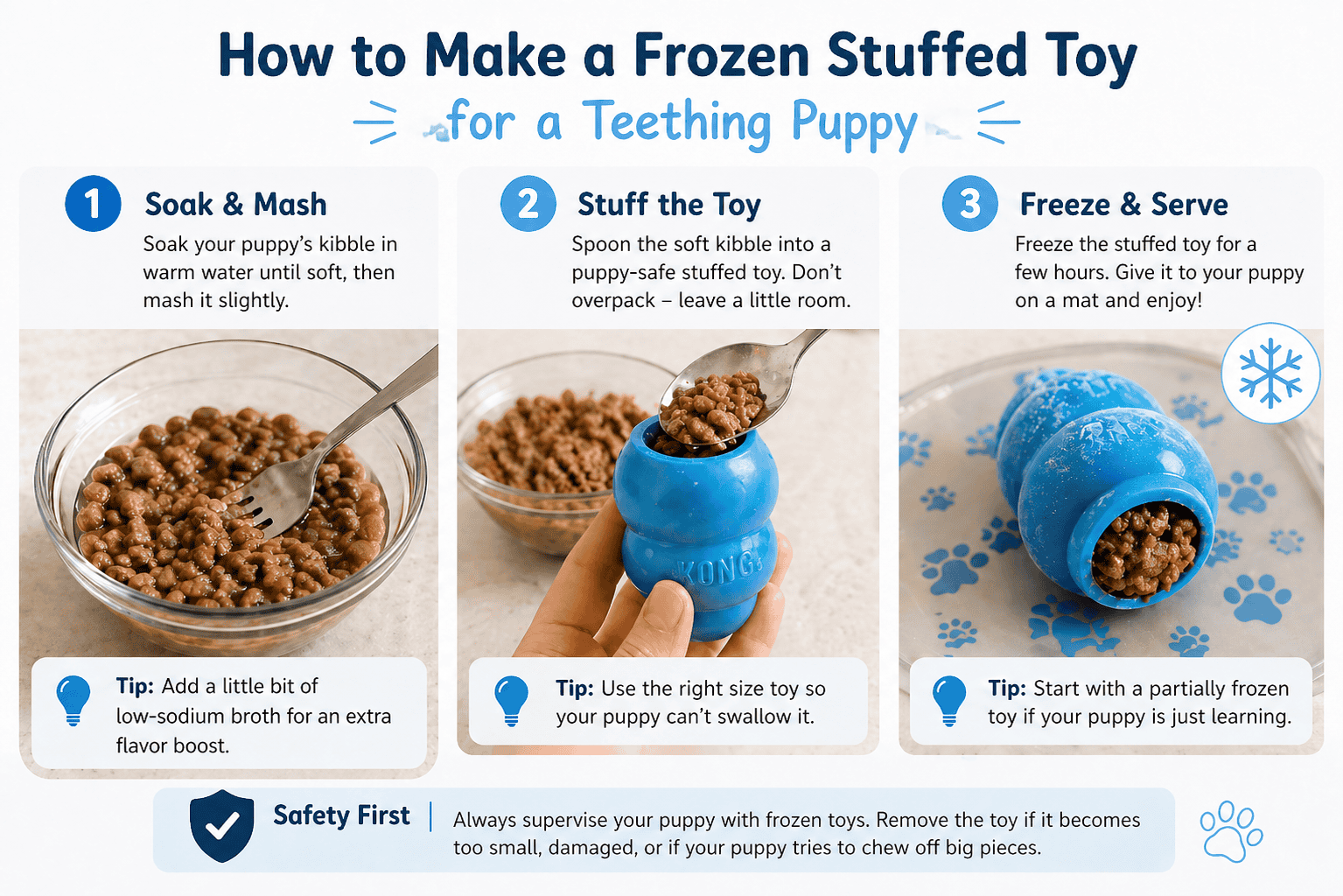
- Stuffed rubber toys
- Freezer-safe bowls
Chewing Enrichment
Chewing is normal for puppies, especially during teething. The goal is to redirect chewing toward safe, puppy-appropriate options.
- Soft puppy chew toys
- Teething toys
- Stuffable toys
- Vet-approved chews
- Chew stations
- Toy rotation
Thinking Enrichment
Puppies need small, successful problems to solve. Training is one of the best forms of Enrichment for Puppies because it builds communication.
- Name response
- Touch
- Sit and down
- Drop it
- Which hand?
- Beginner puzzles
Food Enrichment
Food enrichment turns meals into activities without adding lots of extra treats. Use part of your puppy's regular food whenever possible.
- Slow feeders
- Snuffle mats
- Towel roll-ups
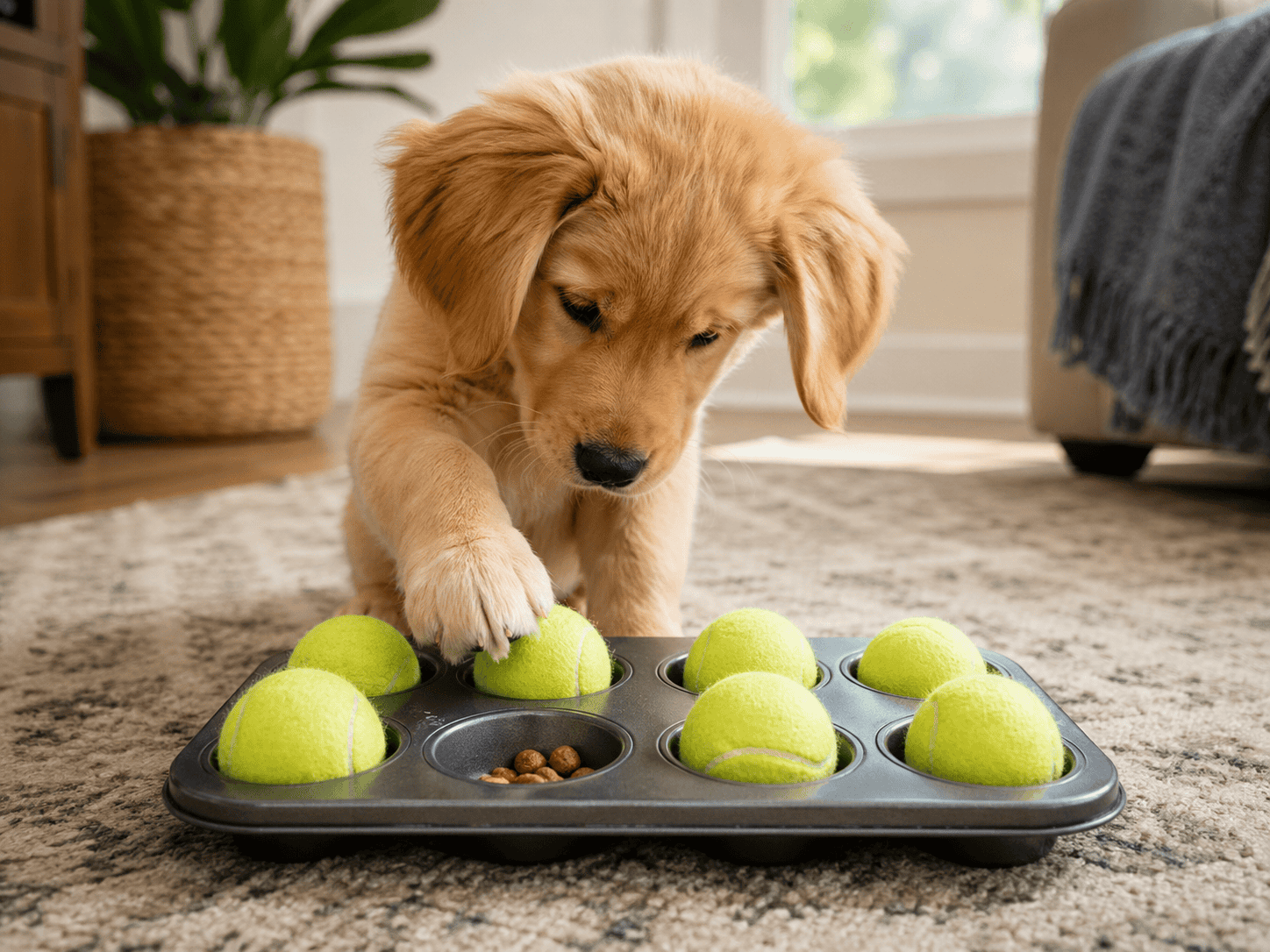
- Muffin tin puzzles
- Stuffed toys
- Training with breakfast
Movement Enrichment
Puppies need movement, but not endless forced running or high-impact play. Keep movement playful, short, and age-appropriate.
- Short walks
- Gentle tug
- Follow-the-leader
- Recall games
- Safe texture walks
- Low obstacle courses
Rest and Settling
Rest is not the opposite of enrichment. It is part of the routine. Puppies need help learning how to come down after activity.
- Mat training
- Crate treat scatters
- Calm chew station
- Soft music
- Predictable nap routine
- Quiet playpen time
Choose the right energy
Calming vs. Energizing Puppy Enrichment
Not all Enrichment for Puppies has the same effect. Some activities help puppies settle. Other activities make them more alert and playful.
If your puppy is already jumping, barking, biting, grabbing clothes, or racing around, start with sniffing, licking, chewing, or a nap routine. Do not add more chaos to chaos.
| Goal | Best puppy enrichment ideas | When to use it |
|---|---|---|
| Calm your puppy down | Lick mat, frozen stuffed toy, soft chew, snuffle mat, scatter feeding, mat training. | Use when your puppy is bitey, frantic, overtired, or struggling to settle. |
| Burn mental energy | Find-it game, beginner puzzle, short training, which hand, muffin tin game. | Use when your puppy has slept, gone potty, and can focus. |
| Add gentle movement | Slow walk, gentle tug, follow-the-leader, recall game, safe obstacle course. | Use when your puppy genuinely needs activity, not when they are overtired. |
| Build confidence | Easy treat trails, calm watching, new object exploration, safe surface walks. | Use for shy puppies or puppies learning about new places and objects. |
Big list
40 Easy Enrichment Ideas for Puppies
You do not need to do all of these. Pick a few that fit your puppy's age, energy, chewing style, and frustration tolerance. For young puppies, keep sessions short and make the first round almost too easy.
Scatter Feeding
Scatter a small portion of kibble on a clean floor, towel, snuffle mat, or safe patch of grass.
Find-It Game
Toss one piece of kibble close by and say "find it." Build slowly to easy hiding spots.
Slow Sniff Walk
Let your puppy sniff more than usual. The goal is exploration, not distance.
Snuffle Mat Meal
Place food on top at first, then tuck it slightly deeper as your puppy learns.
Lick Mat Time
Spread a thin layer of wet puppy food, soaked kibble, pumpkin, or another puppy-safe topping.
Stuffed Puppy Toy
Start with loose kibble and a small amount of soft food so the toy is easy to empty.
Toy Rotation
Leave out a few toys and put the rest away. Rotate every few days to make old toys exciting again.
Breakfast Training
Use part of breakfast for name response, touch, sit, come, or drop it.
Rolled Towel Puzzle
Sprinkle kibble on a towel, roll it loosely, and supervise while your puppy unrolls it.
Muffin Tin Puzzle
Put kibble in a few cups and cover some with tennis balls or puppy-safe toys.
Cardboard Box Search
Use open boxes with a few treats inside. Remove tape, staples, plastic, and labels first.
Treat Trail
Place tiny food pieces a few inches apart and let your puppy follow the trail with their nose.
Cup Game
Hide a treat under one sturdy cup and let your puppy sniff it out. Do not let them chew the cup.
Crumpled Paper Search
Hide food in loosely crumpled plain paper only if your puppy does not eat paper.
Indoor Sniff Safari
Hide kibble around one puppy-safe room using easy spots near toys, mats, and furniture legs.
Gentle Obstacle Course
Use low items like rolled towels, mats, cushions, and chairs. No jumping off furniture.
Hide-and-Seek
Hide behind a doorway and call your puppy. Reward when they find you.
Which Hand?
Hide kibble in one fist and let your puppy sniff to choose. Keep it simple and fun.
Settle on a Mat
Reward your puppy for stepping on a mat, then sitting, lying down, and relaxing there.
Gentle Tug
Use a soft tug toy, keep it low, pause often, and practice drop or sit before restarting.
Name Response
Say your puppy's name once. Reward when they look at you.
Follow-the-Leader
Walk slowly around the room or yard and reward your puppy for checking in with you.
Safe Surface Walk
Let your puppy explore towels, blankets, yoga mats, grass, cardboard, or rubber mats.
Dig Box
Create a supervised digging spot with safe materials if your puppy loves digging.
Bath Practice Lick Mat
Use a suction lick mat in the tub before water is involved to build positive feelings.
Grooming Practice
Touch an ear, reward. Touch a paw, reward. Brush once, reward. Keep sessions short.
Crate Treat Scatter
Scatter kibble inside the crate and let your puppy go in without always shutting the door.
Playpen Puzzle Time
Use one safe activity in a playpen so your puppy can be near you without climbing on you.
Calm Watching
Sit at a distance from people, cars, dogs, bikes, or umbrellas and reward calm looking.
Toy Name Game
Name one toy, show it, and reward interaction. Build slowly toward toy recognition.
Chew Station
Give safe chews in one calm place, such as a crate, playpen, mat, or bed.
Puppy Picnic
Take a blanket to a quiet outdoor spot and let your puppy watch, sniff, and relax.
Food Bowl Upgrade
Use one meal a day for scatter feeding, training, a snuffle mat, or a stuffed toy.
5-Minute Reset
Potty break, scatter feeding, lick mat or chew, then calm crate, pen, or mat time.
Too-Easy Puzzle
Put food in obvious places so your puppy wins quickly and learns the game.
Slow Feeder Dinner
Use a beginner-friendly slow feeder to make meals last longer.
Kitchen Mat
Reward your puppy for staying on a mat while you cook or prepare food.
Sound Practice
Play gentle sounds quietly while your puppy eats or licks. Keep the volume low.
New Object Exploration
Let your puppy investigate a safe object like a hat, backpack, umbrella, or box at their pace.
Bedtime Wind-Down
Final potty break, calm scatter feeding, short lick or chew activity, then quiet sleep space.
Real-life help
What to Do When Your Puppy Is Biting, Chewing, or Zooming
Most people search for Enrichment for Puppies because something is going wrong. Use these quick resets before the behaviour becomes a full meltdown.
When Your Puppy Is Biting
Puppy biting is normal, but it is still painful. Try stopping the hand movement, offering a tug or chew toy, scattering a few pieces of kibble, taking a potty break, then moving into a calm chew, lick mat, or nap space.
When Your Puppy Has Zoomies
Zoomies often happen when a puppy is excited, overstimulated, or tired. Chasing usually makes it worse. Try potty -> find-it game -> lick mat or chew -> calm rest area.
When Your Puppy Chews Furniture
Chewing is a need, not just a behaviour problem. Offer safe chew toys before your puppy finds furniture, rotate chews, block access to favourite trouble spots, and use a playpen or puppy-safe room.
When Your Puppy Barks for Attention
Give your puppy something appropriate before barking escalates: a short training game, snuffle mat, lick mat, chew, or playpen activity. Reward quiet moments before they become noisy moments.
When Your Puppy Struggles in the Crate
Practice short crate sessions while you are home. Scatter treats inside, feed stuffed toys near the crate, and avoid only using the crate when you leave. Keep crate items safe for your puppy's chewing style.
When Your Puppy Cannot Settle
Some puppies do not know how to relax yet. Try a simple sequence: potty break, two-minute sniff game, lick mat or chew, then crate, pen, or mat for quiet rest.
Age-by-age guide
Puppy Enrichment by Age
Your puppy's needs change quickly. A game that is perfect for an 8-week-old puppy may be too easy for a 7-month-old, while an older puppy puzzle may frustrate a younger puppy.
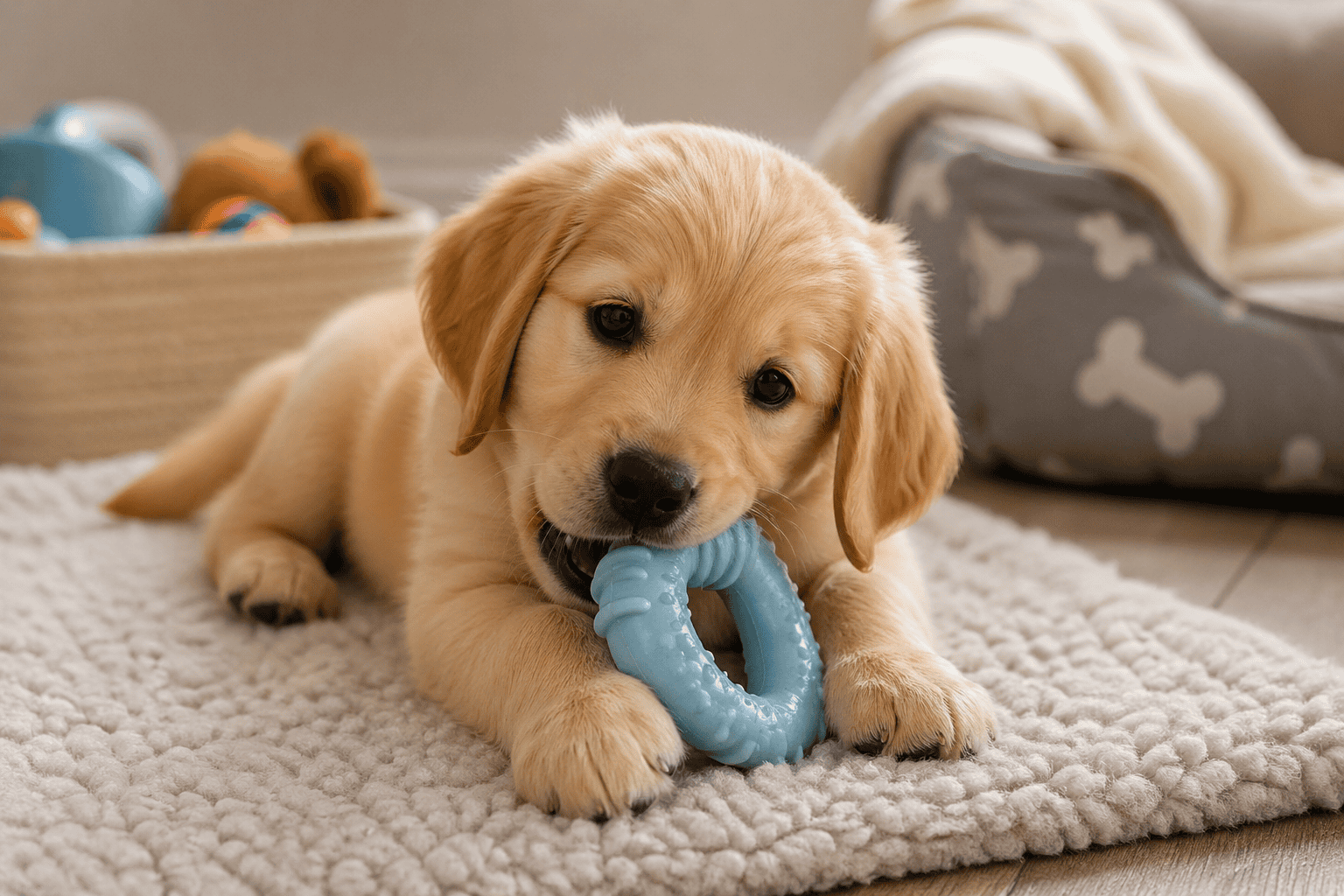
Very Young Puppies
Keep Enrichment for Puppies simple and gentle. The whole world is already new and tiring.
- Scatter feeding
- Lick mats
- Soft chew toys
- Name response
- Gentle handling
- Calm watching
Curious Beginners
Many puppies are ready for slightly harder games, but they still need lots of rest.
- Rolled towel puzzles
- Muffin tin games
- Beginner puzzles
- Find-it games
- Short training
- Mat training
Teething Stage
This stage can feel intense. Puppies may chew more, bite more, and need more structure.
- Frozen lick mats
- Soft teething toys
- Stuffed toys
- Toy rotation
- Scent games
- Calm crate enrichment
Older Puppies
Older puppies often need more challenge, but they are still puppies and still need rest.
- Puzzle toys
- Trick training
- Hide-and-seek
- Sniff walks
- Recall games
- Toy name games
Teething puppy note
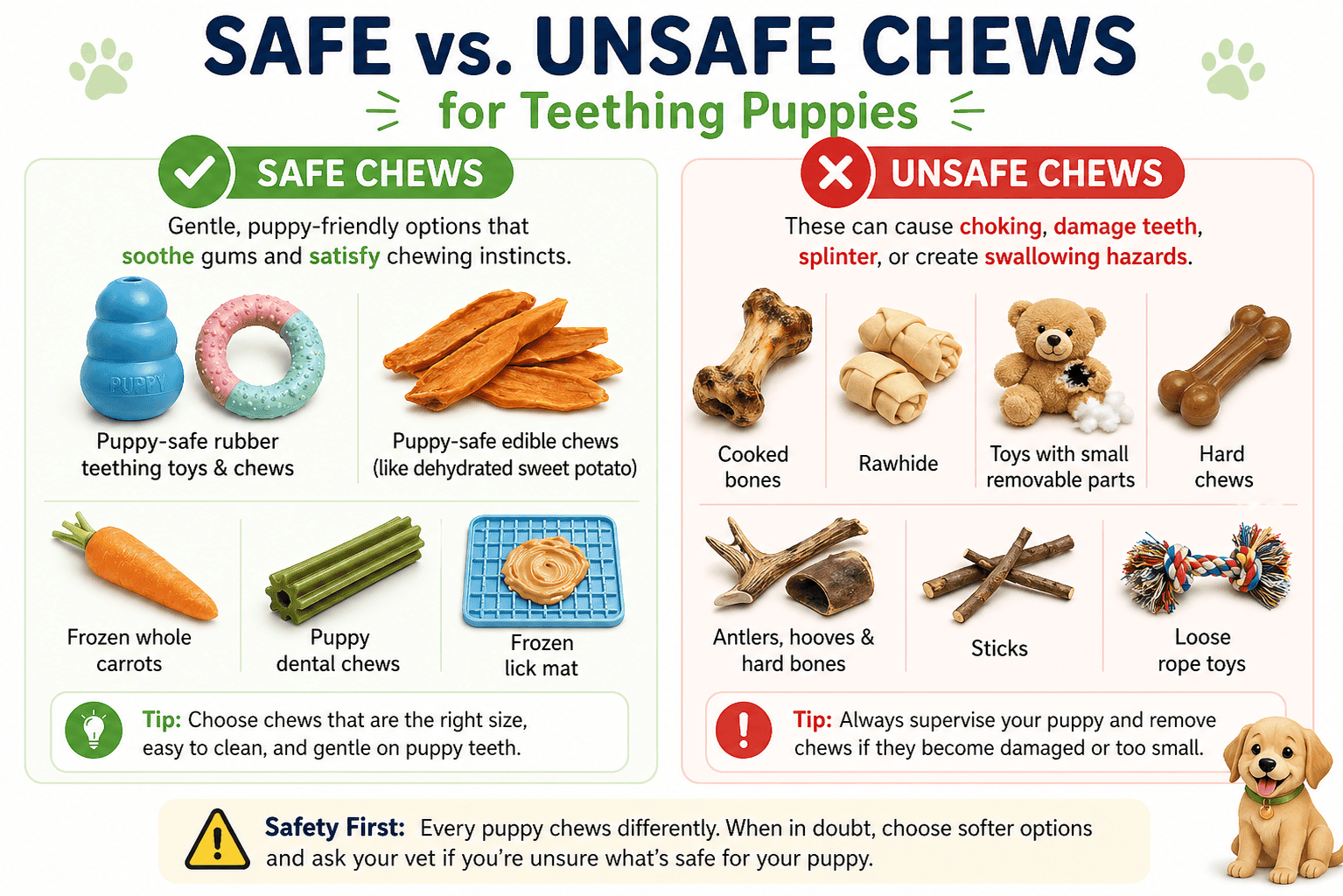
For teething puppies, choose soft puppy chew toys, frozen puppy toys, frozen lick mats, stuffed rubber toys with soft food, and gentle tug. Avoid very hard chews, adult bones, antlers, hard nylon toys, and anything small enough to swallow.
Home-friendly ideas
Indoor, Rainy-Day, Apartment, and Pre-Vaccine Puppy Enrichment
Indoor Enrichment for Puppies is helpful when it is raining, your puppy is not fully vaccinated, you live in an apartment, you need to work, or your puppy needs a quieter day after a busy outing.
Indoor Enrichment for Puppies
- Indoor sniff safari
- Lick mat
- Snuffle mat
- Rolled towel puzzle
- Which hand?
- Mat training
Rainy-Day Puppy Plan
Morning: potty, snuffle mat breakfast, nap.
Afternoon: indoor sniff safari, towel puzzle, chew, nap.
Evening: gentle tug, slow feeder dinner, frozen lick mat.
Apartment Puppy Ideas
- Quiet lick mats
- Scatter feeding on a towel
- Food puzzles
- Treat trails
- Stuffed toys
- Calm watching from a safe spot
Before your puppy is fully vaccinated
Ask your veterinarian where your puppy can safely go in your area. You can still offer safe exposure by carrying your puppy outside, inviting calm visitors over, practicing handling, using indoor sniff games, taking car rides, and letting your puppy watch the world from a safe distance.
Food safety
Food Safety for Puppy Enrichment
Food enrichment is useful, but it still counts as food. Use your puppy's regular meals as much as possible, introduce new foods slowly, and ask your veterinarian about allergies, stomach upset, weight concerns, or diet restrictions.
Puppy-Friendly Options to Ask Your Vet About
- Regular puppy kibble
- Wet puppy food
- Soaked kibble
- Plain pumpkin
- Plain yogurt, if tolerated
- Mashed banana
- Mashed sweet potato
- Small pieces of plain cooked chicken
- Small pieces of carrot
- Blueberries, if tolerated
- Puppy-safe peanut butter with no xylitol
Foods and Ingredients to Avoid
- Xylitol, including products labelled as birch sugar
- Chocolate
- Grapes and raisins
- Onion or garlic-heavy foods
- Alcohol or caffeine
- Macadamia nuts
- Raw yeast dough
- Cooked bones
- Very salty or high-fat foods
- Anything your vet has told you to avoid
Simple portion rule
Use part of your puppy's breakfast, lunch, or dinner for enrichment instead of adding treats on top of meals all day. This keeps Enrichment for Puppies realistic and helps prevent accidental overfeeding.
Make it easier
The Puppy Enrichment Difficulty Ladder
A lot of enrichment fails because it starts too hard. A puppy who wins easy games is more likely to stay interested, keep trying, and build confidence.
Beginner
Best for young puppies, anxious puppies, and first-time enrichment.
Try scatter feeding, open box searches, loose towel rolls, and easy lick mats.
Simple Problem Solving
Best once your puppy understands that food games are fun.
Try snuffle mats, half-covered muffin tins, folded towels, and simple puzzles.
Confident Searchers
Best for puppies who do not give up quickly.
Try covered muffin tins, room searches, stuffed toys, and short scent trails.
Older Puppy Challenge
Best for confident older puppies who enjoy brain work.
Try toy-name games, trick chains, more advanced puzzles, and recall games.
Daily structure
A Simple Daily Enrichment Routine for Puppies
A puppy enrichment routine does not have to be perfect. The goal is a rhythm your puppy can understand: potty -> food or sniffing -> play or training -> calming activity -> nap.
Morning
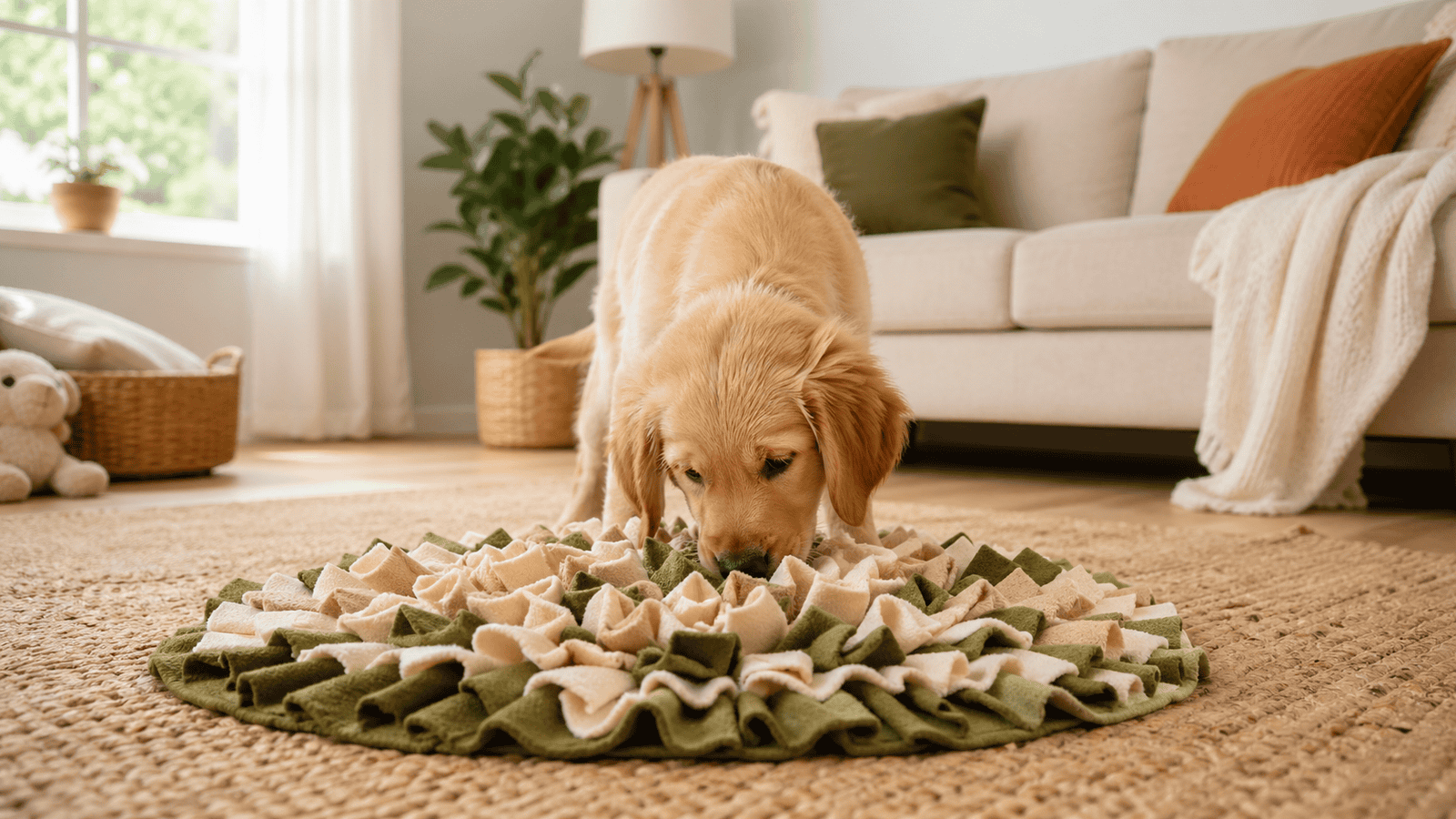
Start with a potty break. Feed breakfast in a snuffle mat, slow feeder, or scatter-feeding setup. Add 2 to 5 minutes of training, then nap.
Late Morning
After potty, try a short sniff walk or indoor sniff safari. Follow with a chew toy or quiet rest time.
Afternoon
Use a homemade game such as a rolled towel puzzle or muffin tin puzzle. Add gentle play only if your puppy can stay calm.
Evening
Use dinner in a stuffed toy, slow feeder, or puzzle feeder. Keep evening play calmer and end with potty, lick mat, chew, or crate routine.
Easy rotation
Weekly Enrichment for Puppies Plan
This weekly plan keeps Enrichment for Puppies varied without making your life complicated. Switch the days around as needed and keep activities shorter for younger puppies.
Monday
Sniff DayScatter feeding, snuffle mat, and a slow sniff walk.
Tuesday
Chew DayToy rotation, safe chew station, and a teething-friendly toy.
Wednesday
Brain Game DayShort training, which hand, and a beginner puzzle.
Thursday
Lick + SettleLick mat, mat training, and calm crate practice.
Friday
DIY Puzzle DayRolled towel puzzle, muffin tin game, or cardboard box search.
Saturday
Socialization DayCalm watching, safe new surfaces, friendly visitor, or vet-approved outing.
Sunday
Reset DaySimple meals, short sniffing, gentle play, and extra rest.
Avoid these
Common Mistakes That Make Puppies More Hyper
Turning every problem into more excitement
If your puppy is already wild, more chasing, wrestling, or fast play can make them more frantic. Try sniffing, licking, chewing, or rest instead.
Making puzzles too hard too soon
Harder is not always better. If your puppy barks at the puzzle, paws frantically, chews it, or gives up, make it easier.
Using too much extra food
Use part of your puppy's meals for enrichment. Treats are useful, but food games can quietly add a lot of calories.
Leaving activity toys out all day
Snuffle mats, puzzle toys, cardboard games, and fabric toys should usually be put away when the activity is finished.
Forgetting naps
A wild puppy is not always under-exercised. Sometimes they are exhausted and need help settling.
Giving too much freedom too soon
If your puppy has access to the whole house, they will find their own enrichment. Use gates, crates, playpens, and puppy-safe rooms.
Using enrichment instead of training
Enrichment helps, but puppies still need skills like come, drop it, leave it, name response, gentle handling, crate comfort, and leash walking.
Safety first
Puppy Enrichment Safety Checklist
Enrichment for Puppies should make your puppy's life better. It should not create choking risks, stomach upset, tooth damage, frustration, guarding, or overstimulation.
Starter setup
Best Beginner Puppy Enrichment Tools
You do not need everything. A simple setup can support most Enrichment for Puppies routines.
One Snuffle Mat
Useful for meal enrichment, sniffing, rainy days, and calm indoor activity.
One Lick Mat
Helpful before naps, during grooming, for crate practice, and during quiet evening routines.
One Stuffable Toy
Great for soaked kibble, wet food, and calm crate or playpen enrichment.
Two or Three Chew Toys
Rotate soft, puppy-safe chew options to help with teething and mouthy behaviour.
One Slow Feeder
An easy way to make dinner more interesting without adding extra food.
DIY Basics
A towel, shallow box, muffin tin, safe toys, and regular kibble can create dozens of games.
Questions
FAQ About Enrichment for Puppies
What is Enrichment for Puppies?
Enrichment for Puppies means giving your puppy safe activities that let them use their brain, nose, mouth, body, and natural instincts. It can include sniffing games, chew toys, food puzzles, training, lick mats, socialization, and calm exploration.
What are the best ways to keep a puppy busy?
Some of the best ways to keep a puppy busy are scatter feeding, snuffle mats, lick mats, stuffed toys, slow feeders, safe chews, short training games, and simple scent games like find it.
How do I mentally stimulate my puppy?
You can mentally stimulate your puppy with short training sessions, food puzzles, sniffing games, hide-and-seek, towel puzzles, muffin tin games, beginner puzzle toys, and calm socialization experiences.
What can I do with my puppy indoors?
Good indoor puppy activities include an indoor sniff safari, gentle obstacle course, hide-and-seek, the which-hand game, lick mats, rolled towel puzzles, cardboard box searches, and mat training.
Can enrichment help with puppy biting?
Yes. Enrichment can help with puppy biting by giving your puppy better ways to use their mouth and energy. Safe chew toys, tug toys, frozen lick mats, stuffed toys, and sniffing games can help redirect biting. Bitey puppies may also need more sleep.
How much enrichment does a puppy need each day?
Most puppies do well with a few short enrichment sessions each day. Start with 2 to 10 minutes at a time, depending on age, then watch your puppy. If they become bitey, frantic, barky, or unable to settle, they may need a nap instead of another activity.
Are puzzle toys good for puppies?
Puzzle toys can be good for puppies when they are safe, easy, and supervised. Start with beginner puzzles. If your puppy gets frustrated, make the game easier.
What DIY games can I make for my puppy?
Easy DIY puppy games include a rolled towel puzzle, muffin tin puzzle, cardboard box search, treat trail, cup game, crumpled paper search, and scatter feeding.
Can too much enrichment make a puppy hyper?
Yes. Too much activity can overstimulate some puppies. If your puppy becomes more bitey, barky, frantic, or unable to settle, they may need rest rather than another game.
What is the best calming activity for a puppy?
The best calming activities for puppies usually involve sniffing, licking, or chewing. Try a snuffle mat, frozen lick mat, safe chew toy, scatter feeding, or slow sniff walk.
What enrichment is good for teething puppies?
Good enrichment for teething puppies includes soft puppy chew toys, frozen puppy toys, frozen lick mats, stuffed rubber toys, gentle tug, and safe chew stations.
How do I keep my puppy busy while I work?
Use a safe playpen, crate, or puppy-proofed room with a supervised enrichment activity such as a snuffle mat, lick mat, stuffed toy, safe chew, or scatter feeding. Plan potty breaks, short training, and naps around your work blocks.
What enrichment can I give my puppy in the crate?
Crate-friendly enrichment may include a safe chew, stuffed puppy toy, frozen lick mat, or small treat scatter. Only leave items in the crate that are safe for your puppy's chewing style, and supervise new items first.
Is a snuffle mat good for puppies?
Yes, a snuffle mat can be great for puppies because it encourages sniffing, slows meals, and provides calm mental stimulation. Start by placing food on top so the game is easy.
Are lick mats good for puppies?
Yes, lick mats can be very useful for puppies. They are especially helpful before naps, during grooming, during crate practice, and when your puppy needs help calming down.
What should I do if my puppy gets frustrated with enrichment toys?
Make the activity easier. Use more obvious food placement, shorter sessions, fewer hiding spots, and easier toys. Puppies should feel successful, not stuck.
Trust notes
Sources and Safety Notes
This guide is for general education and is not a replacement for veterinary care or professional training advice. Always adjust Enrichment for Puppies to your puppy's age, size, breed, vaccine status, chewing style, health, confidence, and frustration tolerance.
Affiliate disclosure: Enriched Pups may earn a commission from qualifying purchases at no extra cost to you. Only choose products that are appropriate for your puppy and supervise new enrichment activities.
Final thoughts
Start Small With Enrichment for Puppies
Puppies are busy, curious, mouthy little learners. Enrichment for Puppies gives those instincts a safe place to go. A snuffle mat can turn breakfast into a calm sniffing game. A lick mat can help your puppy settle before a nap. A chew toy can save your hands and furniture. A short training game can build focus. A predictable nap routine can turn chaos into calm.
You do not need every idea on the internet. Start with the basics: sniff, lick, chew, think, move, socialize, and rest. Then watch your puppy. They will show you what they need.